Eating for Hormonal Health: A Gentle Editorial Guide
No single food balances hormones — but eating patterns genuinely can support them. Here's what the evidence says, minus the diet culture.
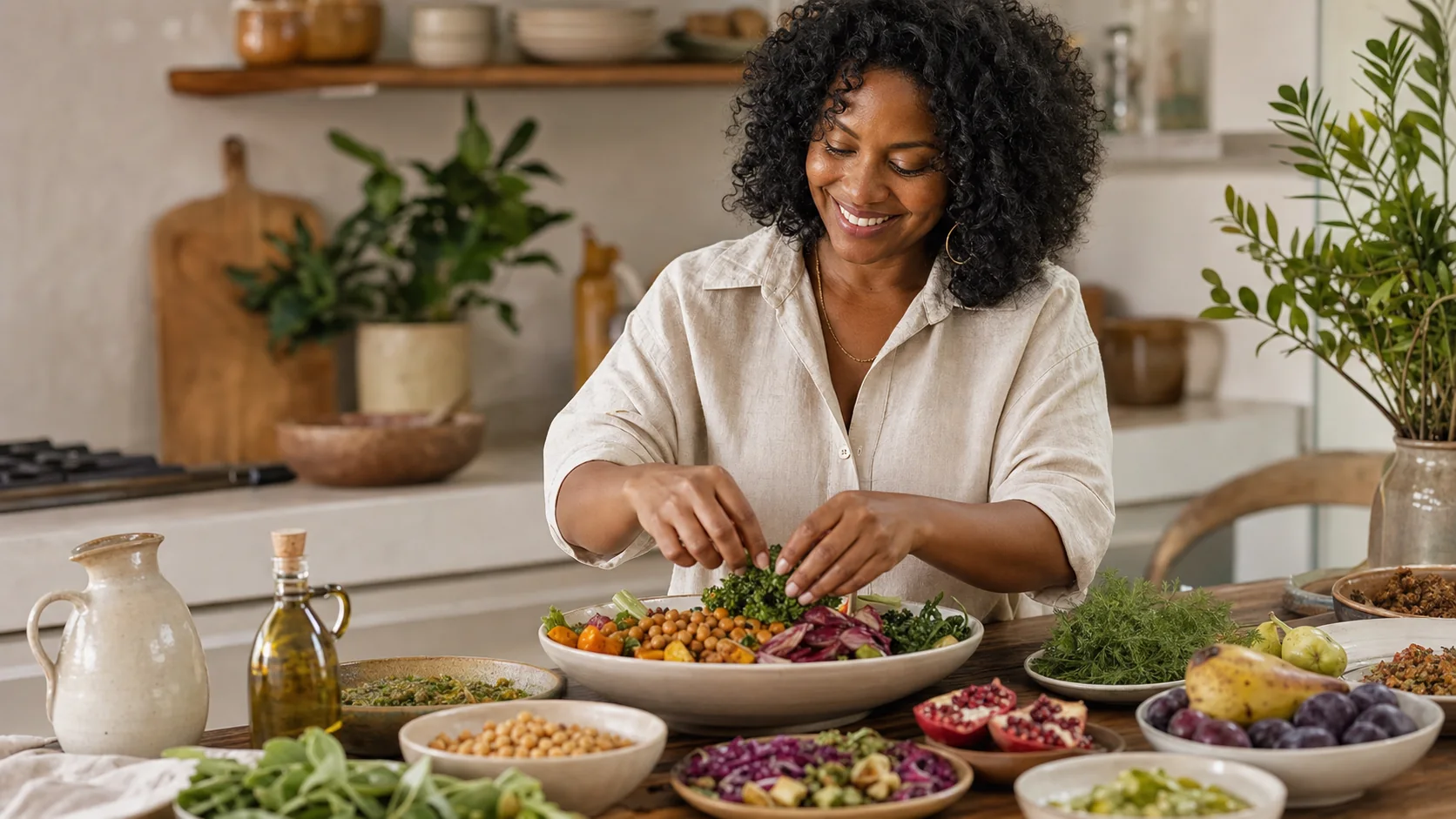
Key Takeaways
- No single food balances hormones on its own.
- Adequate protein, fibre, fats and iron can support hormonal health.
- Sustainable patterns matter more than restrictive rules.
Every week, a new food is crowned a “hormone balancer” and another is declared an enemy. Evelyn's editorial view is calmer: hormones are not balanced by seed rotations or banished by a single vegetable. But eating patterns — the shape of how you eat over months — can influence insulin, inflammation and the raw materials your endocrine system runs on.
The principles that survive scrutiny
- Eat enough. Chronic under-eating is one of the fastest ways to disrupt cycles — the body downgrades reproduction when it senses famine
- Prioritise protein and fibre at most meals; both smooth the glucose-insulin curve that matters so much in PCOS
- Choose fats deliberately: oily fish, nuts, seeds, olive and avocado oils supply the building blocks of steroid hormones
- Keep iron on the radar if you menstruate — heavy periods plus low intake is the classic route to fatigue
- Treat alcohol and ultra-processed foods as sometimes-foods, not staples — without moralising either
Food should support your health and honour your culture. Any plan that requires you to fear your grandmother's cooking is a bad plan.
A word on supplements
A few have real evidence in specific situations — folic acid before and during early pregnancy, vitamin D where deficiency is confirmed, iron when stores are low, and inositol has promising data in PCOS. Most of the rest is marketing. Spend your money on actual food first, and take supplement advice from someone qualified who has seen your blood work.
Above all, be wary of any advice that shrinks your life. The goal of hormonal nutrition is more energy, steadier cycles and a better relationship with your plate — not a smaller, more anxious existence. Gentle consistency beats heroic restriction, every single time.
References
Sources We Trust
- Teede HJ, et al. International evidence-based guideline for PCOS — lifestyle chapter. Monash University; 2023.
- World Health Organization. Healthy diet fact sheet. Geneva: WHO; 2020.
- Unfer V, et al. Myo-inositol in polycystic ovary syndrome: a systematic review. Endocrine Connections. 2017;6:R43–R51.
Educational note
This article supports education and empowerment. It does not replace personalised medical advice, diagnosis or treatment from your own healthcare professional.